
Common Online Scams in 2026 and How to Avoid Them
Online scams are becoming more advanced in 2026. Learn the most common digital scams and how to protect yourself from financial loss and identity theft.
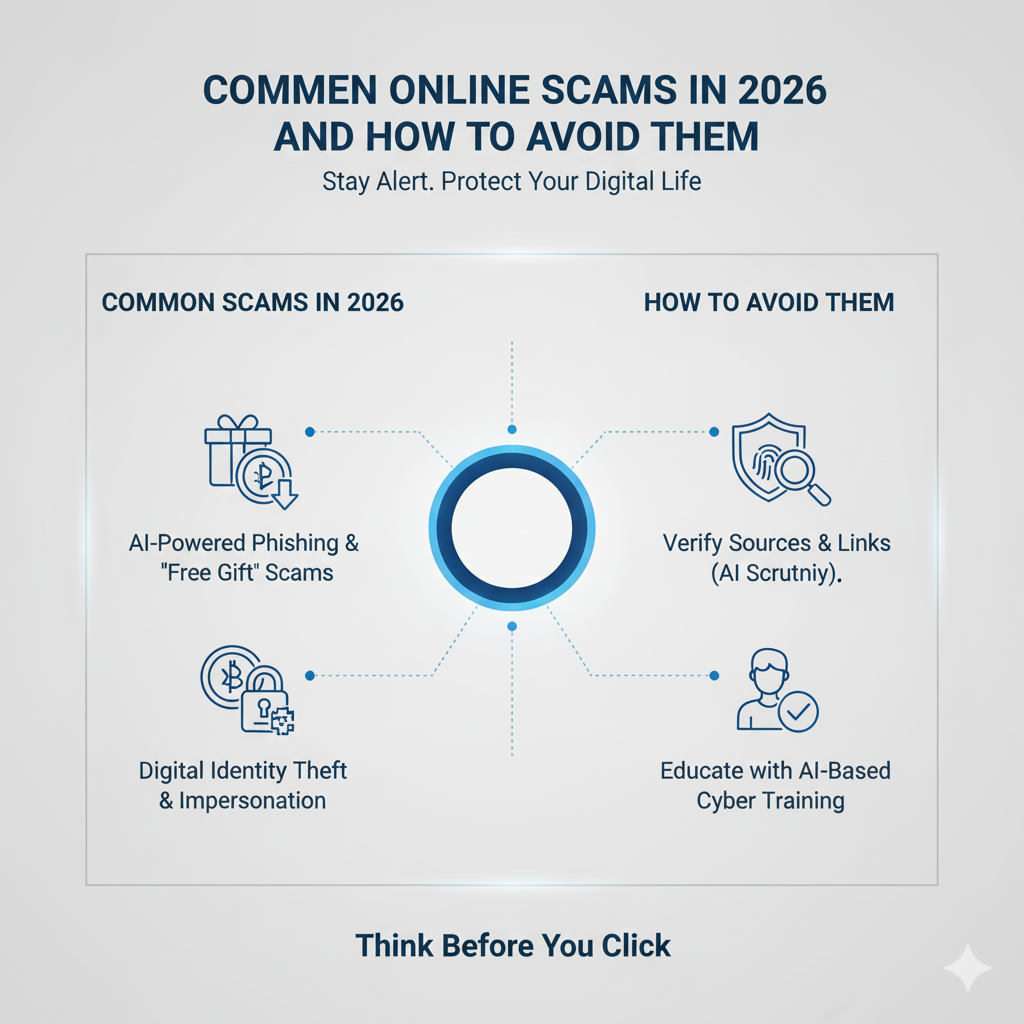
Online scams have evolved beyond obvious spam messages. In 2026, scammers use AI, fake websites, and social engineering to trick even tech-savvy users.
Here are the most common scams—and how to avoid them.
🎣 1. Phishing & Fake Emails
Scammers impersonate:
Banks
Delivery services
Social media platforms
How to avoid:
Check sender addresses carefully
Never click suspicious links
Avoid downloading unknown attachments
🤖 2. AI Voice & Deepfake Scams
Scammers now use AI to clone:
Voices of family members
Company executives
Customer support agents
Always verify urgent requests through secondary channels.
(Related reading: How to Stay Safe Online in 2026 on https://www.quicktech.info)
💸 3. Fake Investment & Crypto Scams
Red flags include:
“Guaranteed profits”
Pressure to act fast
Requests for private keys
If it sounds too good to be true—it is.
🧾 4. Fake Apps and Websites
Some apps are designed only to:
Steal credentials
Display ads
Track personal data
Download apps only from official app stores.
🚨 Final Note
The strongest defense against scams is skepticism. Slow down, verify, and never act under pressure.